
 Français

Nous proposons différents types de cellules, de batteries et de solutions de systèmes de stockage d'énergie.
Pour toute question concernant nos produits, veuillez nous contacter et nous vous répondrons dans les 24 heures.



Nous proposons différents types de cellules, de batteries et de solutions de systèmes de stockage d'énergie.
Pour toute question concernant nos produits, veuillez nous contacter et nous vous répondrons dans les 24 heures.
Dans le secteur de l'entreposage et de la logistique actuel, où tout va très vite, la disponibilité des chariots élévateurs a un impact direct sur la productivité, la sécurité et les coûts d'exploitation. La batterie est le cœur de votre chariot élévateur électrique. Choisir la bonne batterie peut faire toute la différence entre un fonctionnement fluide en 3x8 et des arrêts fréquents pour recharge ou maintenance.
Batteries modernes au lithium fer phosphate (LFP) Les batteries au plomb-acide ont révolutionné l'alimentation des chariots élévateurs, offrant des avantages considérables par rapport aux batteries traditionnelles. Ce guide vous présente les points clés à prendre en compte et met en lumière les options LFP haute performance adaptées aux applications d'entrepôt.
Pourquoi le choix de la batterie d'un chariot élévateur est important dans les entrepôts
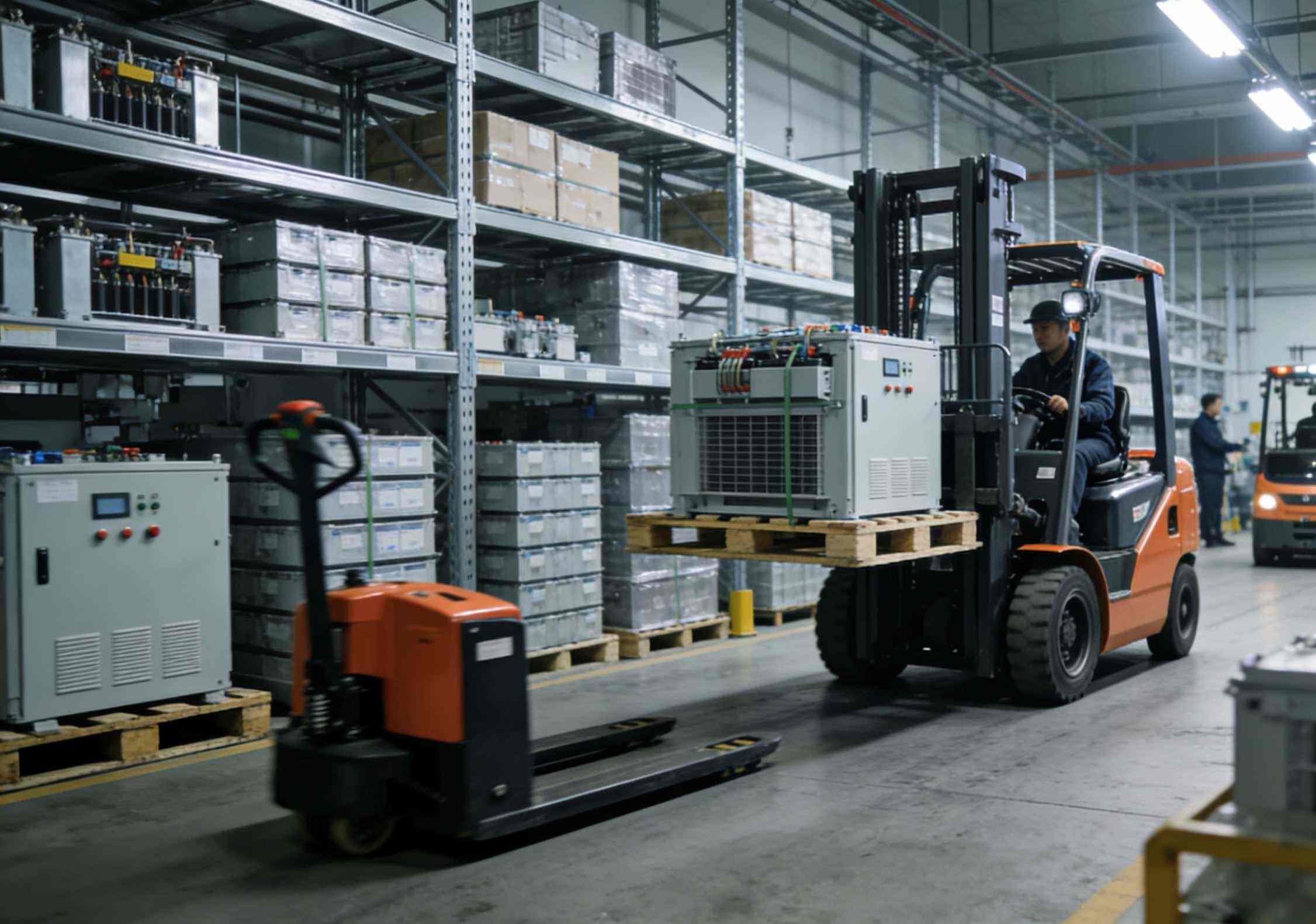
Les entrepôts ont besoin d'une alimentation électrique fiable pour :
• Fonctionnement en plusieurs équipes (souvent 16 à 24 heures par jour)
• Accélérations, levées de pied et freinages régénératifs fréquents
• Espaces restreints exigeant une performance constante
• entrepôt frigorifique ou environnements à température variable
Un mauvais choix de batterie entraîne une baisse de la productivité, une augmentation des factures d'énergie, des coûts de maintenance accrus et des risques pour la sécurité. Les batteries lithium-ion LFP excellent dans ce domaine grâce à leur haute densité énergétique, leur charge rapide et leur longue durée de vie.
Batteries au plomb-acide ou au lithium LFP pour chariots élévateurs
Fonctionnalité | Batteries au plomb traditionnelles | Lithium LFP (par exemple, série LMDD) |
Cycle de vie | 500 à 1 500 cycles | 3 000 à 6 000+ cycles |
Temps de charge | 8 à 12 heures + temps de refroidissement | 1 à 3 heures (recharge d'opportunité) |
Entretien | Arrosage régulier, égalisation | Sans entretien |
Efficacité | 70 à 80 % | 95 % et plus |
Poids | plus lourd | Plus léger (meilleure efficacité du véhicule) |
Stabilité de la tension | Chute sous charge | Puissance de sortie constante |
Sécurité | Déversements d'acide, gaz hydrogène | Système de gestion de batterie intégré, stabilité thermique |
La chimie LFP est particulièrement sûre : elle résiste mieux à l'emballement thermique que les autres types de lithium et fonctionne bien dans des conditions d'entrepôt.
1. Tension et capacité (Ah)
Choisissez une batterie adaptée aux besoins de votre chariot élévateur. Les tensions courantes sont 24 V, 36 V, 48 V, 80 V, etc. Une capacité plus élevée (Ah) offre une plus grande autonomie entre les charges.
Exemples tirés des offres LFP actuelles :
• LMDD76.8V210Ah-24S — Compacte, adaptée aux chariots élévateurs plus petits ou plus légers.
• LMDD76.8V560Ah / 660Ah-24S — Options haute capacité pour une utilisation intensive et continue en entrepôt.
• LMDD80V280Ah / 330Ah / 410Ah-25S — Série à tension plus élevée pour les chariots élévateurs plus grands et plus puissants nécessitant un couple et une capacité de levage élevés.
2. Taux de décharge et de charge
Recherchez des batteries supportant un courant de décharge continu élevé (par exemple, 400 A nominal, 450 A en crête) et une charge rapide. La plupart des spécifications indiquent une capacité de gestion du courant robuste, adaptée aux cycles de charge/décharge intensifs en entrepôt.
3. Fonctionnalités du système de gestion de la batterie (BMS)
Une protection BMS avancée est essentielle :
• Protection contre les surtensions, les sous-tensions, les surintensités et les variations de température
• surveillance de l'isolation
• Niveaux de défaut (1er/2e/3e niveau) avec commande automatique par relais • Communication CAN pour l'intégration avec les contrôleurs du véhicule
Tous les modèles de la série LMDD examinés incluent des tableaux de protection complets avec des seuils clairs pour l'état de charge (SOC), la tension des cellules, le déséquilibre de température et la résistance d'isolation.
4. Gestion thermique et adaptabilité environnementale
Les températures en entrepôt varient. Les packs LFP de qualité supportent des températures de -20 °C à 60 °C grâce à des dispositifs de coupure en cas de température basse/haute et à une option de chauffage.
5. Durée de vie du cycle et coût total de possession (CTP)
Les batteries au lithium sont souvent rentabilisées en 2 à 3 ans grâce à la réduction des temps d'arrêt, à la diminution de la consommation d'énergie et à un entretien minimal.
6. Aptitude physique et intégration
Vérifiez les dimensions, le poids et la compatibilité des connecteurs. Les conceptions modulaires (avec modules BIU et ST) offrent une grande flexibilité.
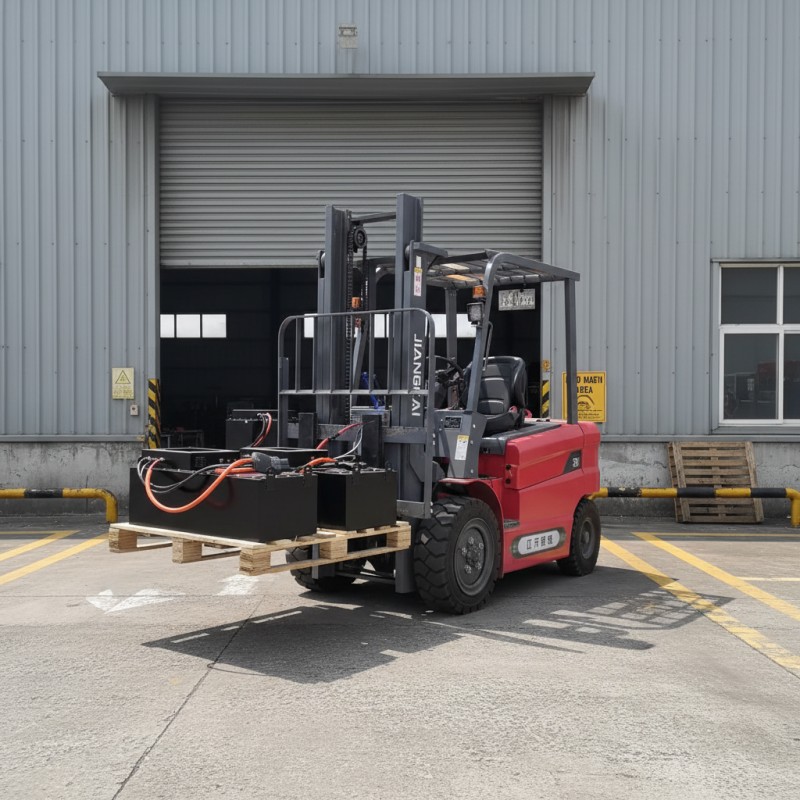
Série 76,8 V (configuration 24S)
• Idéal pour de nombreux chariots élévateurs à 3 et 4 roues.
• Capacités de 210 Ah (usage léger) à 660 Ah (opérations d'entrepôt intensives).
• Prise en charge robuste du protocole CAN pour la communication entre le véhicule et le chargeur.
Série 80V (configuration 25S)
• Adapté aux applications à haute puissance.
• Modèles : 280 Ah, 330 Ah et 410 Ah.
• Idéal pour les chariots élévateurs à grande portée ou les opérations de levage en hauteur.
Tous les modèles utilisent des cellules LFP de qualité supérieure (par exemple, L300F210A, L173F280A ou IFP58200225-330Ah) et respectent les normes de sécurité GB/T 36972-2018.
Meilleures pratiques pour la mise en œuvre d'un entrepôt
• Recharge d'opportunitéLes batteries au lithium fonctionnent de manière optimale avec de courtes recharges pendant les pauses — fini les changements de batterie.
• Surveillance de la flotteUtiliser les données du BMS via le bus CAN pour la maintenance prédictive.
• chambres froidesChoisissez des modèles avec fonction chauffante si la température de fonctionnement est inférieure à 0 °C.
• Formation à la sécurité: Mettre l'accent sur les procédures de charge appropriées et la réponse aux pannes.
• Calcul de dimensionnementEstimer la consommation énergétique journalière (kWh) en fonction des cycles d'ascenseur, de la distance parcourue et du poids de la charge. Prévoir une marge de 20 à 30 % pour tenir compte du vieillissement et des pics de consommation.
Choisir la bonne batterie pour votre chariot élévateur — notamment un modèle LFP performant comme la série LMDD — améliore considérablement l'efficacité de votre entrepôt, réduit les coûts d'exploitation et renforce la sécurité. Que vous ayez besoin d'une batterie compacte de 210 Ah ou d'une batterie haute capacité de 660 Ah, il est essentiel d'adapter la tension, la capacité et les fonctionnalités à vos besoins spécifiques.
Prêt à moderniser votre flotte ? Évaluez vos modèles de chariots élévateurs, leurs cycles de service et votre infrastructure de recharge, puis consultez les fournisseurs proposant des fiches techniques détaillées et des options de personnalisation.
Quel est votre principal défi en matière de batteries de chariots élévateurs dans l'entrepôt ? Contactez-nous pour une recommandation personnalisée.
FAQ
Q1 : Quelle est la différence entre les batteries de chariot élévateur 76,8 V et 80 V ?
A: La série 76,8 V (configuration 24S) est généralement utilisée pour les chariots élévateurs standard à moyens, tandis que la série 80 V (configuration 25S) est conçue pour les applications à plus forte puissance nécessitant un couple et une capacité de levage plus élevés, comme les grands chariots à mât rétractable et les opérations de levage en hauteur.
Q2 : Ces batteries lithium LFP sont-elles meilleures que les batteries plomb-acide traditionnelles ?
R : Oui. Les batteries LFP offrent une durée de vie 3 à 6 fois supérieure, une charge 3 à 4 fois plus rapide, un fonctionnement quasi sans entretien, un rendement énergétique plus élevé (plus de 95 %) et une sécurité accrue grâce à la protection BMS intégrée. Elles prennent également en charge la charge d'opportunité, ce qui les rend idéales pour les opérations d'entrepôt en plusieurs équipes.
Q3 : Quelle capacité dois-je choisir pour mon chariot élévateur d’entrepôt ?
A : Cela dépend de vos heures de fonctionnement quotidiennes et de votre charge.
210 Ah–330 Ah : Convient aux applications légères à moyennes ou aux opérations à un seul poste.
410Ah–660Ah : Recommandé pour une utilisation intensive en entrepôt, sur plusieurs quarts de travail (16 à 24 heures).
Q4 : À quelle vitesse ces batteries au lithium pour chariots élévateurs peuvent-elles se recharger ?
R : La plupart des modèles prennent en charge la charge rapide en 1 à 3 heures. Ils sont conçus pour une recharge d'appoint pendant les pauses, réduisant considérablement les temps d'arrêt par rapport aux 8 à 12 heures nécessaires pour les batteries au plomb.
Q5 : De quelles protections de sécurité ces batteries sont-elles dotées ?
A : Toutes les batteries de la série LMDD sont dotées d'un BMS avancé avec protection multiniveaux (niveaux 1 à 3), comprenant :
• Surtension/sous-tension, surintensité, sur/sous-température
• Surveillance de l'isolation
• Détection des déséquilibres de tension cellulaire
• Commande par relais pour la protection contre la charge/décharge
Q6 : Ces batteries peuvent-elles fonctionner dans des entrepôts frigorifiques ?
R : Oui. Ils supportent une température de décharge jusqu'à -20 °C et sont équipés d'une protection contre les basses températures. Certains modèles proposent des fonctions de chauffage pour une performance optimale en environnements froids (inférieurs à 0 °C).
Q7 : Quelle est la durée de vie prévue de ces batteries LFP pour chariots élévateurs ?
R : En utilisation appropriée, les batteries LFP offrent généralement 3 000 à 6 000 cycles, voire plus, et durent souvent de 8 à 12 ans dans les applications d’entrepôt, surpassant largement les batteries au plomb-acide.
Q8 : Ces batteries sont-elles conformes aux normes de sécurité ?
R : Oui. Elles sont conçues conformément à la norme GB/T 36972-2018 (norme nationale chinoise relative à la sécurité des batteries) et utilisent des cellules LFP de haute qualité.
Q9 : Comment choisir entre les différents modèles LMDD ?
A : Adaptez la tension et la capacité aux spécifications de votre chariot élévateur. Consultez le manuel de votre chariot élévateur ou contactez-nous en précisant le modèle et le cycle d'utilisation quotidien pour obtenir une recommandation précise.
Q10 : Ces batteries sont-elles sans entretien ?
R : Oui. Contrairement aux batteries au plomb, les batteries lithium LFP ne nécessitent aucun appoint d'eau, aucun contrôle d'acide et aucune charge d'égalisation régulière.

Laissez un message
Scannez vers WeChat :

Hi! Click one of our members below to chat on